



The Model Law on Customary Courts defines customary courts as:
“courts established or social institutions recognised in accordance with the provisions of regional or federal laws to adjudicate disputes based on customary laws.”
In practical terms, this definition shows that customary courts have five core elements.
1. They may take different institutional forms
Customary courts are not limited to formally constituted courts. The Model Law recognises that they may also be social institutions that are legally recognised. This reflects the reality that community-based justice institutions often exist in locally rooted forms before they are formally incorporated into the legal system. Article 2(2) expressly includes both “courts” and “social institutions,” while Article 7(2) sets conditions for their recognition, including the existence of a dispute-resolution structure, voluntary submission for recognition, and commitment to the law’s principles.
2. They must be recognised by law
The authority of customary courts does not rest only on social acceptance. Under the Model Law, they must be established or recognised under regional or federal law. Article 2(2) places them within a legal framework, and Article 3 confirms that the law applies to customary courts recognised at both federal and regional levels.


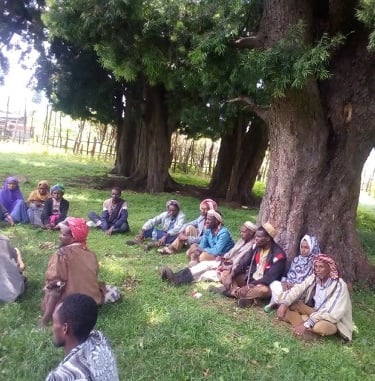

Customary courts play a central role in resolving disputes across many parts of Ethiopia, often serving as the most accessible and trusted form of justice for local communities.
However, their widespread use has not always been matched by systematic oversight, documentation, or alignment with national legal standards and human rights principles.
The initiative responds to this gap by promoting transparency, safeguarding the rights of vulnerable groups, and supporting the constructive integration of customary justice mechanisms into the existing justice system. It also plans to do more by considering pathways for integration with broader justice and rule-of-law frameworks, including peace-building and transitional justice.